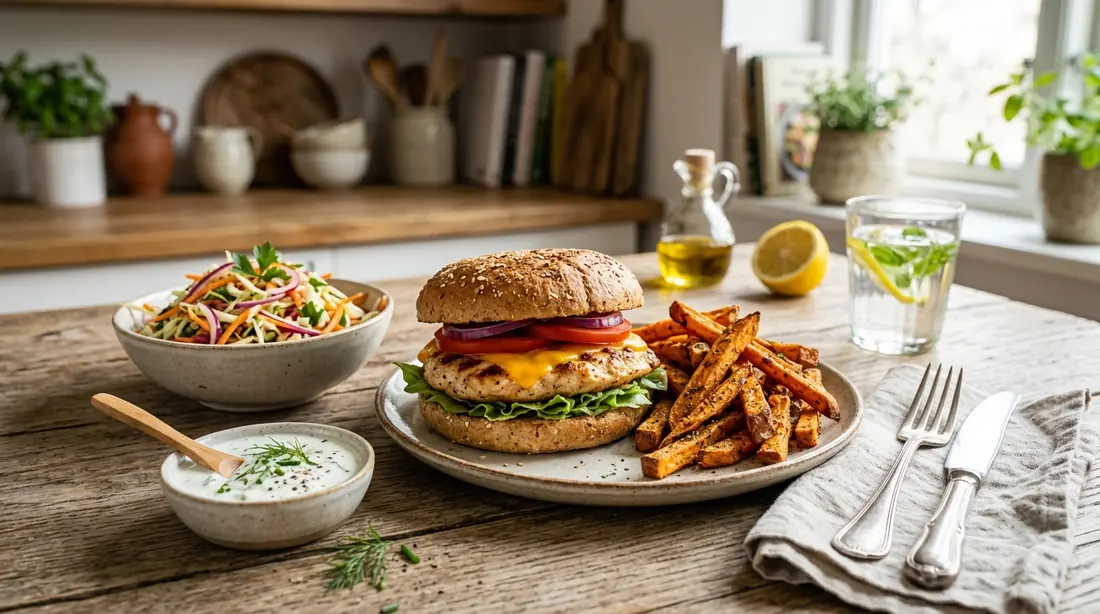
Eating more vegetables does not require a completely new menu. Small changes to meals you already know may be easier to repeat than a dramatic overhaul. Choose one idea that tastes good and let it become familiar before trying another.
Ingredients and simple prep
- A bag of frozen peas or mixed vegetables
- Fresh spinach, cabbage, carrots or courgette
- Tinned tomatoes and cooked beans
- Lemon, herbs or a simple yogurt dressing
- Olive oil and basic spices for roasting
Step-by-step method
- Add a handful of frozen peas to pasta in the final minutes of cooking, or stir spinach into a hot tomato sauce until wilted.
- Grate a carrot or courgette into a bean chili, soup or pasta sauce and simmer until soft.
- Roast a tray of chopped seasonal vegetables while the main dish cooks; season with oil, pepper and a favorite spice.
- Build crunch into wraps and sandwiches with cabbage, cucumber or lettuce, keeping wet ingredients separate until serving.
- Offer two vegetable textures at the table—one cooked and one crisp—so everyone can choose their favorite.
Make flavor part of the plan
A squeeze of lemon, herbs, garlic or a yogurt sauce can make vegetables more inviting. Avoid turning them into an obligation; preparation and seasoning often matter more than novelty.
Reduce waste
Frozen and tinned vegetables count as useful kitchen staples. Wash fresh produce, store cut vegetables chilled, and turn leftover cooked vegetables into a soup or omelette the next day.
From the Food Bloom kitchen: Adapt the seasoning, ingredients and portion sizes to suit your household. Follow packaging and food-safety advice for the ingredients you use.