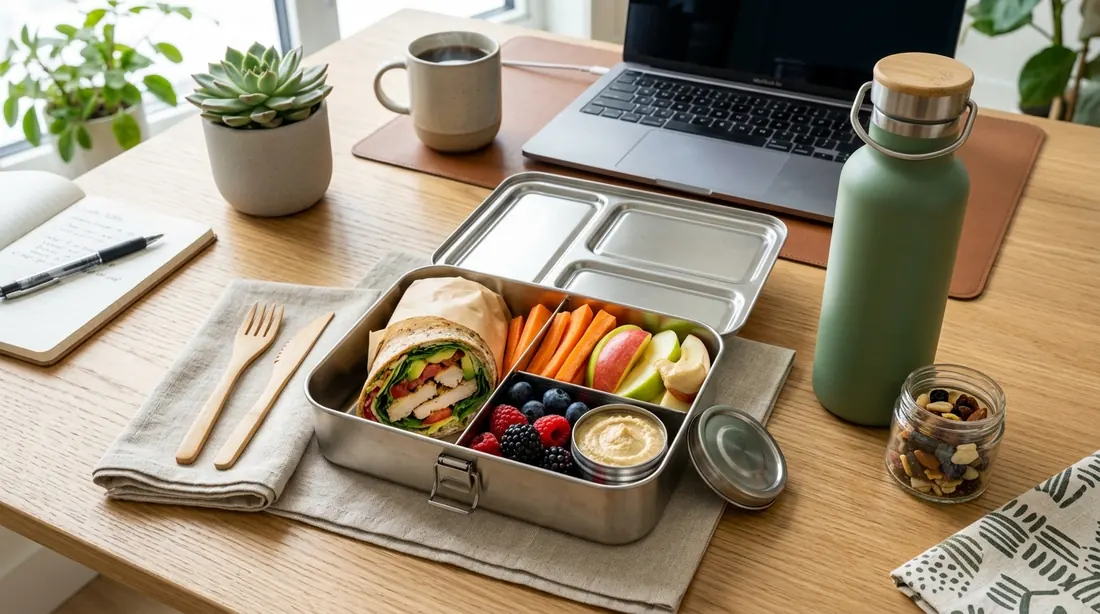
A snack can be a pleasant bridge between meals rather than something grabbed without thought. Combining foods that provide protein and fiber often creates a more satisfying option than choosing either on its own. These ideas are deliberately flexible.
Ingredients and simple prep
- Plain yogurt with berries and oats
- Apple or pear slices with nut or seed butter
- Wholegrain toast with hummus
- Cooked eggs with cherry tomatoes and crackers
- Roasted chickpeas with a piece of fruit
- Cottage cheese or a dairy-free alternative with vegetables
Step-by-step method
- For a quick yogurt bowl, layer plain yogurt, rolled oats and washed berries. Sprinkle with cinnamon if you like.
- For a crunchy plate, cut fruit just before serving and add a modest spoon of nut or seed butter, checking allergies first.
- Spread hummus on wholegrain toast and top with sliced cucumber or tomatoes.
- For a savory snack box, pack a properly cooked egg with vegetables and a few wholegrain crackers. Keep chilled until eaten.
- To make roasted chickpeas, pat rinsed chickpeas dry, toss with a little oil and spice, then roast at 200°C fan until crisp, checking regularly.
Adjust to your appetite
A snack is optional, and portions depend on your hunger and the timing of the next meal. Choose pairings you enjoy and that fit your dietary needs.
Prepare safely
Use insulated storage for snacks containing eggs or dairy. For children, cut foods into age-appropriate shapes and follow relevant choking and allergy guidance.
From the Food Bloom kitchen: Adapt the seasoning, ingredients and portion sizes to suit your household. Follow packaging and food-safety advice for the ingredients you use.